Translanguaging and Multilingual Identity in the English Classroom
By Loxivia - November 28, 2026 - 4 min read
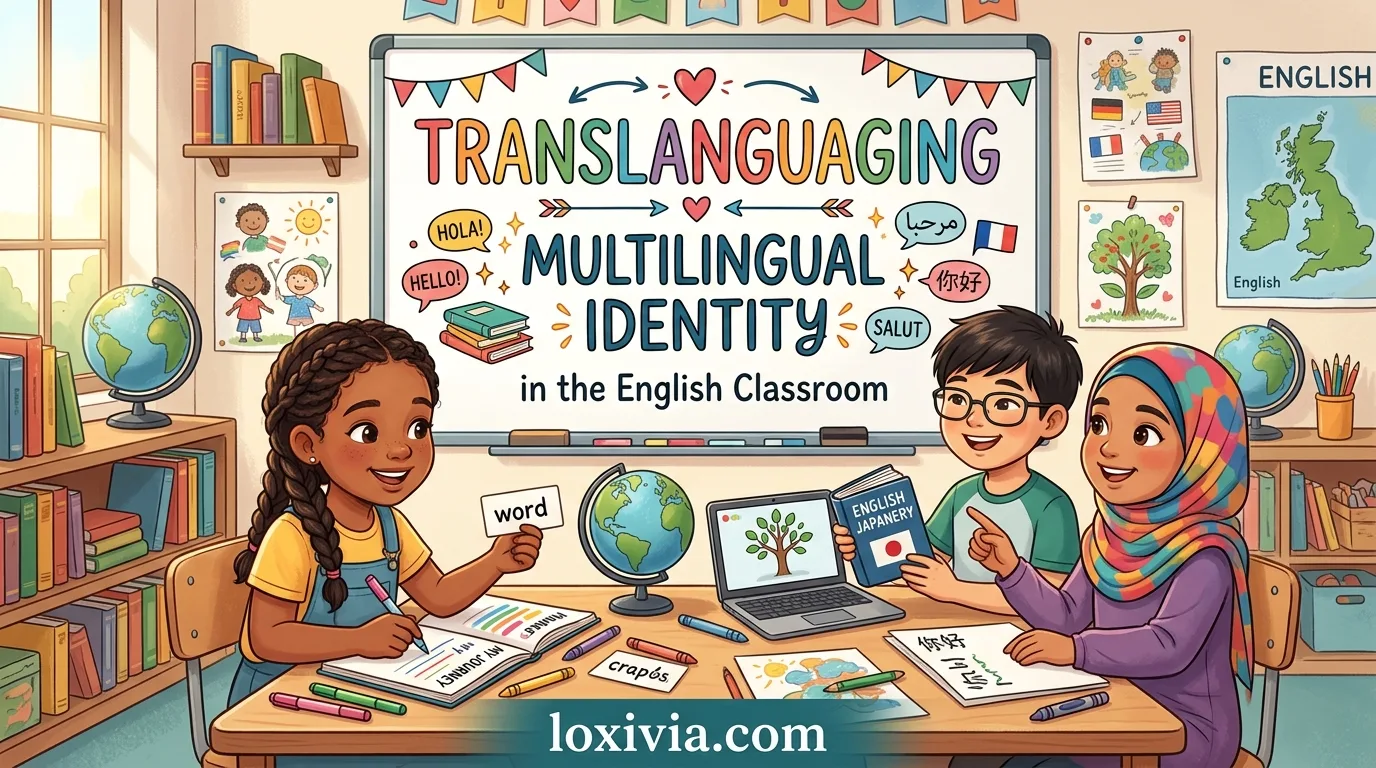
Introduction
Have you ever wanted to use your first language to explain a new English word? That natural impulse is called translanguaging. In this article, you will learn what translanguaging means, how it connects to your multilingual identity, and how to use it wisely in the English classroom.
Definition
Translanguaging is the practice of using all the languages you know as a single, flexible system to communicate, learn, and make meaning. Instead of switching completely from one language to another, you move between languages naturally. For example, you might read a text in English, discuss it in your first language, and then write your answer in English.
Your multilingual identity is how you see yourself as a speaker of more than one language. It includes your languages, your culture, and your experiences. In the English classroom, translanguaging can support both learning and identity.
Synonyms and Related Terms
| Term | Nuance | Register |
|---|---|---|
| Code-switching | Moving between languages in a conversation, often sentence by sentence | Academic / everyday |
| Code-mixing | Blending languages within a sentence or phrase | Academic / informal |
| Language brokering | Translating for others, often family members | Academic / community |
| Plurilingualism | The ability to use several languages for different purposes | Academic / policy |
| Metalinguistic awareness | Thinking about how language works | Academic / educational |
Common Collocations
| Collocation | Example |
|---|---|
| translanguaging space | The teacher created a translanguaging space where all languages were welcome. |
| multilingual identity | Her multilingual identity grew stronger after she shared her home language in class. |
| language repertoire | Students use their full language repertoire to solve problems. |
| strategic use | Strategic use of the first language can help you learn English faster. |
| linguistic resource | Your first language is a linguistic resource, not a barrier. |
Five Natural Example Sentences
- During the group project, we used translanguaging to explain difficult ideas in English and Arabic.
- The teacher encouraged multilingual identity by asking us to bring words from our home languages.
- When I write in English, I sometimes plan in Spanish first. That is a form of translanguaging.
- Our classroom became a translanguaging space where no one felt embarrassed about using two languages.
- She said that her multilingual identity helped her understand English grammar better.
Common Mistakes
- Mistake: Thinking that translanguaging means you are not serious about learning English.
- Fix: Translanguaging is a strategy. You still practice English, but you use your first language to support understanding.
- Mistake: Using translanguaging only when you are confused.
- Fix: Use it to plan, brainstorm, compare, and check meaning at any time.
- Mistake: Believing that your first language will slow you down.
- Fix: Research shows that a strong first language can help you learn additional languages.
- Mistake: Forgetting that translanguaging is not the same as translation.
- Fix: Translation moves meaning from one language to another. Translanguaging uses all your languages together to think and communicate.
Word Family
| Noun | Verb | Adjective | Adverb |
|---|---|---|---|
| translanguaging | translanguage | translanguaged | translanguagingly (rare) |
| multilingualism | multilingualize (rare) | multilingual | multilingually |
| identity | identify | identical | identically |
Mini Practice Quiz
- What is translanguaging?
- Give one example of how you can use translanguaging in your English class.
- True or false: Translanguaging means you should stop using English.
- What is multilingual identity?
- Name one benefit of using your full language repertoire.
Answers:
- Using all your languages flexibly to communicate and learn.
- Example: Discussing a reading in your first language, then writing a summary in English.
- False. You still use English, but you also use other languages as resources.
- How you see yourself as a speaker of more than one language.
- It can help you understand difficult ideas and feel more confident.
FAQ
Q1: Is translanguaging allowed in English-only classrooms? A1: It depends on the teacher and the school. Many teachers now see translanguaging as a helpful tool, even in English-only settings. You can ask your teacher if you can use your first language for planning or brainstorming.
Q2: Will translanguaging stop me from learning English? A2: No. Translanguaging supports English learning because it helps you understand content and express ideas. The goal is still to improve your English.
Q3: How can I show my multilingual identity in class? A3: You can share words from your home language, compare grammar, or tell stories about your culture. Small actions like these make your identity visible and valued.
Conclusion
Translanguaging and multilingual identity are not problems to fix. They are strengths to use. When you bring your whole language self into the English classroom, you learn more and feel more at home.